
Choosing the right CNC lathe machine is an important decision for manufacturers, machining workshops, distributors, and industrial buyers. The right machine can improve machining efficiency, production consistency, and long-term operating costs, while an unsuitable configuration may limit your production capacity.
With different CNC lathe designs, machining capacities, spindle configurations, control systems, and automation options available, buyers need to evaluate more than just the machine price.
This guide explains the key factors to consider when choosing a CNC lathe machine for metal turning and industrial production.
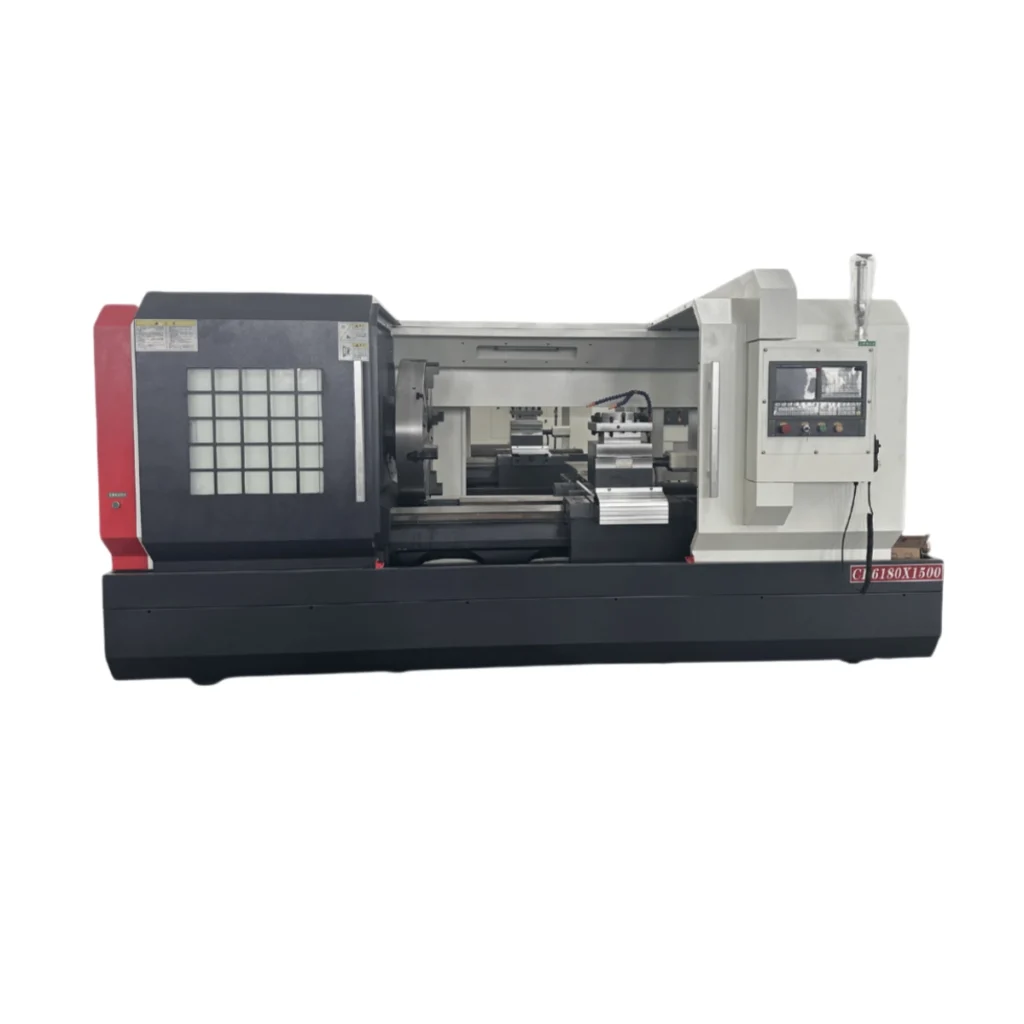
1. Understand What a CNC Lathe Machine Does
A CNC lathe machine uses computer numerical control to automatically control the movement of the cutting tool and workpiece during turning operations.
CNC turning is commonly used for producing cylindrical and rotational components such as:
- Shafts
- Bushings
- Flanges
- Discs
- Sleeves
- Threads
- Pins
- Automotive components
- Industrial machinery parts
Compared with conventional manual turning, CNC machining can provide more consistent production and reduce the amount of manual intervention required for repetitive machining operations.
The appropriate CNC lathe configuration depends on the size, material, geometry, accuracy requirements, and production volume of your workpieces.
2. Choose Between a Flat Bed and Slant Bed CNC Lathe
One of the first decisions when purchasing a CNC lathe machine is selecting the appropriate machine structure.
Flat Bed CNC Lathe
A flat bed CNC lathe is a versatile option for general turning applications and a wide range of workpiece sizes.
Its rigid structure makes it suitable for applications requiring stable cutting performance and relatively large turning capacity.
Flat bed CNC lathes are commonly used for:
- Shaft machining
- Flange machining
- General metal turning
- Heavy-duty turning
- Large workpiece machining
- Small and medium batch production
For example, ZCIT’s CNC lathe range includes machines from compact configurations such as the CK6140 to large-capacity machines such as CK61100, CK61125 and CK61160. These machines provide different swing diameters, machining lengths and spindle capacities for different production requirements.
When should you choose a flat bed CNC lathe?
A flat bed configuration is particularly worth considering when you need:
- Larger machining capacity
- Strong cutting performance
- Heavy-duty turning
- Flexible workpiece sizes
- General-purpose CNC turning
3. When Should You Choose a Slant Bed CNC Lathe?
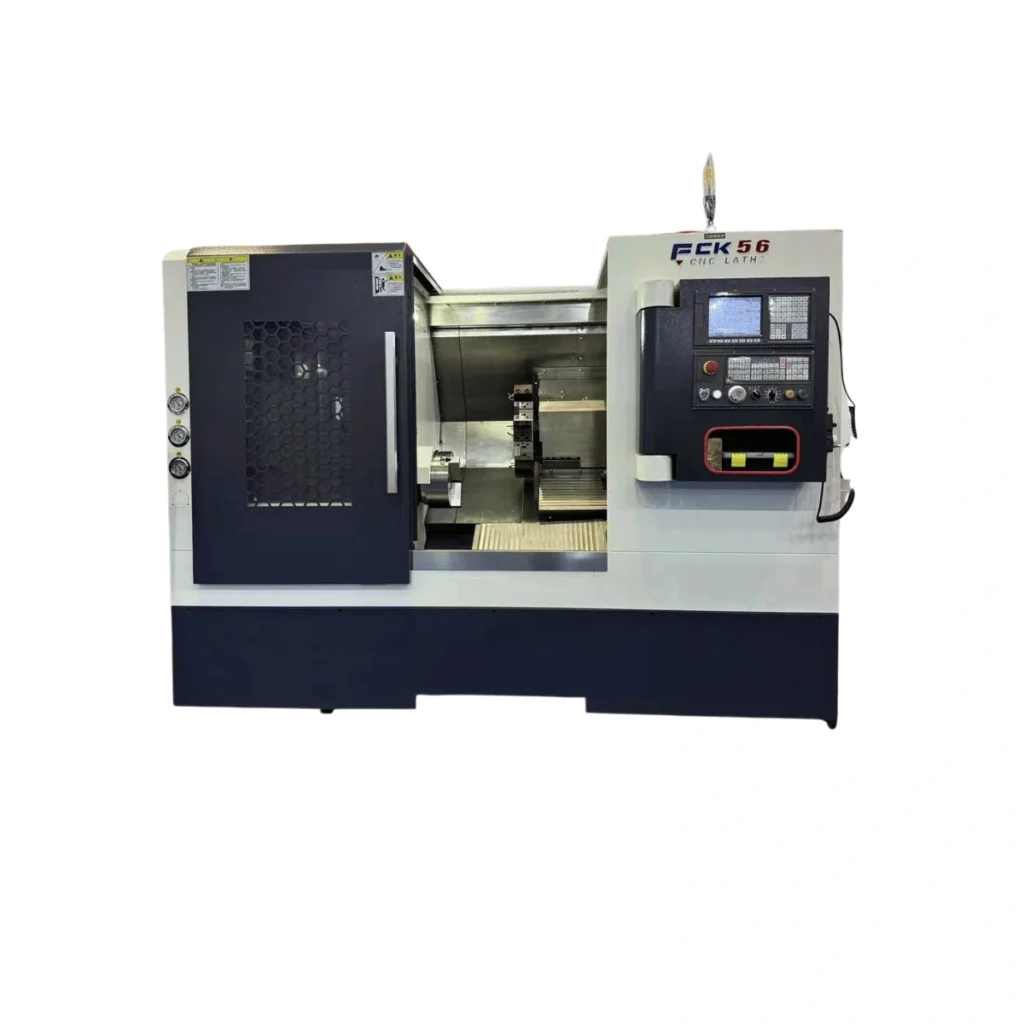
A slant bed CNC lathe uses an inclined machine bed designed to improve chip evacuation and support efficient automated machining.
Slant bed CNC lathes are often considered for production environments where:
- Faster machining cycles are important
- Automatic chip removal is required
- Multiple tools are used frequently
- Production efficiency is a priority
- Complex components need efficient machining
For manufacturers producing relatively high volumes of precision components, a slant bed CNC lathe can provide an efficient solution.
The best choice depends on the actual workpiece and production process rather than simply choosing the more advanced-looking machine.
4. Check the Maximum Workpiece Size
Before requesting a CNC lathe quotation, determine the largest workpiece that the machine needs to handle.
Three important specifications are:
Lit suspendu
This indicates the maximum diameter that can theoretically swing over the machine bed.
For example, ZCIT’s CK6140 provides a 400 mm swing over bed, while the CK6150 provides 500 mm and the CK6163 provides 630 mm.
Distance entre les centres
This determines the approximate maximum machining length available between the headstock and tailstock.
For example, the CK6140 has a 1,000 mm distance between centers, while the CK6180 provides a 3,000 mm distance between centers.
Alésage de broche
Spindle bore is especially important when machining long shafts, bars, tubes, and other components that need to pass through the spindle.
For example, ZCIT CNC lathe configurations include spindle bores such as 52 mm, 82 mm, 105 mm and larger capacities depending on the model.
Tip: Don’t select a machine based only on the largest diameter of your current workpiece. Leave sufficient machining capacity for future production requirements.
5. Consider Spindle Power and Cutting Requirements
Spindle motor power affects the machine’s cutting capability.
For light and medium-duty machining, a smaller spindle motor may be sufficient. Heavy-duty machining and larger workpieces generally require greater spindle power and rigidity.
When comparing CNC lathe machines, consider:
- Workpiece material
- Maximum cutting depth
- Workpiece diameter
- Cutting speed
- Required production volume
- Tool type
- Required surface finish
For example, ZCIT’s product range includes configurations with spindle motors such as 5.5 kW, 7.5 kW, 11 kW, 15 kW and 22 kW for different machining requirements.
6. Choose the Right CNC Control System
Le système de commande CNC is another important consideration.
Depending on the machine configuration and customer requirements, CNC lathes may be equipped with systems such as:
- GSK
- FANUC
- Siemens
The best CNC control system depends on your operators, existing equipment, programming requirements, service availability, and local technical support.
If your factory already operates machines using a particular control system, selecting the same or a compatible system can simplify operator training and maintenance.
For international buyers, it is also worth confirming whether local technicians are familiar with the selected CNC system before placing the order.
7. Consider the Tool Post and Automation
Tool configuration can significantly affect production efficiency.
Depending on the machine, buyers may choose configurations such as:
- Four-station tool posts
- Six-station tool posts
- Hydraulic turrets
- Automatic tool changing systems
- Other customized tooling configurations
For simple turning operations, a standard tool post may be sufficient.
For more complex or high-volume production, a hydraulic turret or automatic tool changing configuration can reduce manual tool changes and improve production efficiency.
The right configuration should be based on your actual machining process rather than adding unnecessary options.
8. Think About Your Industry and Applications
A CNC lathe machine can be used across many industries.
Typical applications include:
Automotive Manufacturing
CNC lathes can machine shafts, bushings, hubs, discs and other rotational components.
Fabrication de machines
Manufacturers can use CNC turning for shafts, sleeves, flanges, pins and custom mechanical components.
Oil & Gas
Large-capacity CNC lathes may be suitable for machining larger cylindrical components and related industrial parts.
Équipements énergétiques
Heavy-duty turning machines can be used for large shafts, rollers, cylinders and other industrial components.
General Metal Fabrication
CNC turning is also widely used in job shops and general manufacturing environments requiring repeatable production.
The key is to select the machine based on your actual workpiece dimensions and machining process.
9. Don’t Compare CNC Lathe Machines by Price Alone
Machine price is important, but it should not be the only purchasing factor.
When comparing CNC lathe suppliers, consider the complete value of the machine:
- Machine structure
- Spindle configuration
- système de commande CNC
- Tooling
- Machine accuracy
- Inspection process
- Warranty
- Spare parts
- Technical support
- Export experience
- Delivery and logistics
- After-sales service
A machine with a slightly higher initial price may provide better value if it offers better configuration, reliability, support and long-term production performance.
10. Ask the Supplier for a Complete Machine Configuration
Before placing an order, ask the supplier to provide a detailed technical quotation.
Your quotation should clearly specify:
Machine type
Balancelle au-dessus du lit
Distance entre les centres
Alésage de broche
Vitesse de broche
puissance du moteur de broche
système de commande CNC
Tool post or turret
Chuck size
Tailstock configuration
Machine accuracy
Electrical requirements
Standard accessories
Optional accessories
Warranty
Delivery time
This helps you compare different suppliers on the same technical basis.
11. Why Factory Support Matters
Buying a CNC lathe machine is not only about receiving the equipment.
For international buyers, communication and technical support are also important.
A reliable supplier should be able to assist with:
- Machine selection
- Technical configuration
- Production updates
- Pre-shipment inspection
- Export documentation
- Shipping coordination
- Installation guidance
- Spare parts
- After-sales support
ZCIT states that it provides CNC lathes, machining centers and laser cutting machines for customers worldwide, with export support covering technical consultation, production progress, logistics coordination and after-sales service.
12. CNC Lathe Machine Buying Checklist
Before requesting a quotation, prepare the following information:
Workpiece
- Maximum diameter
- Maximum length
- Material
- Workpiece weight
Machining
- Turning operations
- Threading requirements
- Boring requirements
- Required accuracy
- Required surface finish
Production
- Daily production volume
- Batch size
- Expected future production
Machine
- Flat bed or slant bed
- système de commande CNC
- Puissance de broche
- Alésage de broche
- Tool post or turret
- Chuck size
The more information you provide, the easier it is for a supplier to recommend the appropriate configuration.
Conclusion
Choosing the best CNC lathe machine requires more than comparing prices.
The right machine should match your workpiece dimensions, material, machining operations, production volume, accuracy requirements and future production plans.
For general-purpose and heavy-duty turning, a flat bed CNC lathe can provide a practical and flexible solution. For higher-efficiency production and automated machining, a slant bed CNC lathe may be a better option.
Before purchasing, compare the complete machine configuration, CNC control system, spindle capacity, tooling, technical support and after-sales service.
If you are unsure which CNC lathe configuration is suitable for your production, prepare your workpiece diameter, length, material and machining requirements and ask the supplier for a recommended configuration.
ZCIT provides CNC lathe machines, centres d'usinage CNC et fiber laser cutting machines for manufacturers, distributors and industrial buyers worldwide.
Need help choosing the right CNC lathe machine? Contact ZCIT for a machine recommendation and quotation.